The Big Shift
A fast, unfiltered download of how companies in Singapore, Vietnam and Southeast Asia are making a big shift in their approach to market, operating models, team composition, leadership style - leveraging new technologies and skills.Real cases, real impact, why it works and what leaders can learn from it.

The Big Shift
Where to find us:
Episodes

Follow us for updates:



Host
Moritz Kaffsack
20 years leading organizations through commercial growth and organisational change.Founder of Flexer - transformation and capability building.Organizer of the PCA Catalyst Fractional Business Accelerator.Founder of Portfolio Careers in Asia - the region's leading community of senior independent professionals.Connect on Linkedin:


Subscribe to Updates
Brought to you by

© 2026 PCA Flexer Pte. Ltd
Privacy Policy
We respect your privacy and are committed to protecting your personal information. This Privacy Policy outlines how we collect, use, disclose, and safeguard your personal data when you use our website. It also explains your rights and choices regarding your personal information.1. ORGANIZATION AND SCOPE. PCA Flexer Pte. Ltd is responsible for collecting and processing personal information on this website. This Privacy Policy applies to the personal information collected through our website and governs our privacy practices. It also covers interactions and services provided on the website. Please note that it does not apply to third-party websites. By using our website, you acknowledge and agree to the collection, use, and disclosure of your personal information as described in this Privacy Policy.2. INFORMATION COLLECTED. By using our website, you acknowledge and consent to the collection, processing, and storage of your personal information as described in this Privacy Policy. We may collect various types of personal information from users of our website. The types of information we collect may include:• Personal identification information: such as your name, email address, phone number, and email address.
• Demographic information: such as your age, gender, and location.
• Technical information: such as your IP address, browser type, operating system, and device information.
• Usage data: such as the pages you visit, the actions you take on our website, and the referring/exit pages.We collect this information when you voluntarily provide it to us, such as when you fill out forms on our website, subscribe to our newsletters, or interact with our website's features and functionalities. We may also collect information automatically through the use of cookies and similar technologies.3. PURPOSE OF COLLECTION. We collect personal information on our website to enhance your experience, develop new features, and improve our products and services. We may use your information to communicate with you, provide customer support, and send important updates. For purchases or transactions, we collect and process information to fulfill orders and deliver requested products or services. Personalization of content, recommendations, and advertisements may be based on your preferences and browsing behavior. We comply with laws, enforce terms of service, protect rights, and prevent fraud. Aggregated and anonymized data helps us analyze user behavior and improve our offerings.4. LEGAL BASIS FOR PROCESSING. The legal basis for processing personal information on our website includes the following:
• Consent: We may rely on your explicit consent for certain processing activities, and you have the right to withdraw your consent at any time.
• Contractual necessity: If you enter into a contract with us through our website, we may collect and process your personal information to fulfill our obligations to you.
• Legal obligations: We may process personal information to comply with applicable laws and legal requirements.
• Legitimate interests: In some cases, we may process personal information based on our legitimate interests, such as improving our website, ensuring security, preventing fraud, and conducting analytics.5. CONSENT. By using our website and providing your personal information, you consent to the collection, processing, and storage of your information as described in this Privacy Policy. Your participation and submission of personal information are voluntary, and you have the right to choose whether to provide it. We may request explicit consent for certain categories of personal information as required by applicable laws. You can withdraw your consent at any time by contacting us. Please note that revoking consent may affect the services we can provide. If you're under 21, obtain consent from your parent or guardian before providing personal information. When providing personal information of others, ensure you have their consent and inform them of the processing purposes.6. DATA RETENTION. We retain your personal information as long as necessary or required by law. Retention periods vary based on the type and purpose of information. If legally obligated or for legitimate reasons, we may retain it longer. If you request deletion, we'll make reasonable efforts to comply, unless legally obligated or for valid reasons. Anonymized or aggregated data derived from your information may be used for statistical or research purposes. When no longer needed, we securely delete or anonymize your information to prevent unauthorized access or use.7. DATA SECURITY. We prioritize the security and confidentiality of your personal information. Appropriate measures are in place to prevent unauthorized access, alteration, or disclosure. Only authorized individuals with a legitimate need can access your information. We have internal policies and procedures to handle personal data properly and prevent data breaches. When transferring data to third-party providers, we ensure they have safeguards in place. In the event of a data breach, we will mitigate it and notify you and relevant authorities as required. While we take precautions, it's important for you to protect your information and use strong passwords. We regularly review and improve our security practices. However, no method of data transmission or storage is entirely secure. By providing information online, you acknowledge and accept the associated risks.8. INDIVIDUAL RIGHTS. As an individual whose personal information is collected and processed on our website, you have certain rights regarding your personal information. These rights include:a) Access your personal information
b) Rectify inaccurate or incomplete personal information
c) Request the deletion of your personal information in certain circumstances
d) Request the restriction of processing of your personal information
e) Receive your personal information in a structured, commonly used format
f) Object to the processing of your personal information based on legitimate interests
g) Withdraw your consent for processing your personal information if consent is relied upon.
To exercise your rights, please contact us using the provided contact information. We will respond to your request in accordance with applicable data protection laws. Please note that there may be limitations and exceptions to these rights.9. THIRD-PARTY LINKS AND SERVICES. Our website includes links to third-party websites and services. We have no control over their privacy practices or content. It's important to review the privacy policies of any third-party websites or services you visit.When you click on a third-party link or use their service, you'll be redirected to their own website or platform with its own privacy policy. We're not responsible for their actions, privacy practices, or content. Third-party services integrated into our website have their own privacy policies and terms.Take time to understand how they handle your personal information. Remember, when interacting with third-party websites or services, you're subject to their policies. Exercise caution and review the privacy practices of third parties before sharing personal information or using their services.10. UPDATES TO THE PRIVACY POLICY. We may update this Privacy Policy to reflect changes in our practices or legal requirements. The revised version will be posted on our website and will be effective immediately. It is recommended that you review the Privacy Policy periodically to stay informed about how we handle your personal information. By continuing to use our website, you accept the updated Privacy Policy. If there are significant changes that affect your rights, we may provide additional notice or obtain your consent as required by law.
© 2026 PCA Flexer Pte. Ltd
Trailer
The Trailer to The Big Shift Podcast - with Moritz Kaffsack. A fast, unfiltered download of how companies in Singapore, Vietnam and Southeast Asia are making a big shift in their approach to market, operating models, team composition, leadership style - leveraging new technologies and skills.Real cases, real impact, why it works and what leaders can learn from it.
Text
Intro
The introduction to The Big Shift Podcast - with Moritz Kaffsack. A fast, unfiltered download of how companies in Singapore, Vietnam and Southeast Asia are making a big shift in their approach to market, operating models, team composition, leadership style - leveraging new technologies and skills.Real cases, real impact, why it works and what leaders can learn from it.
Text
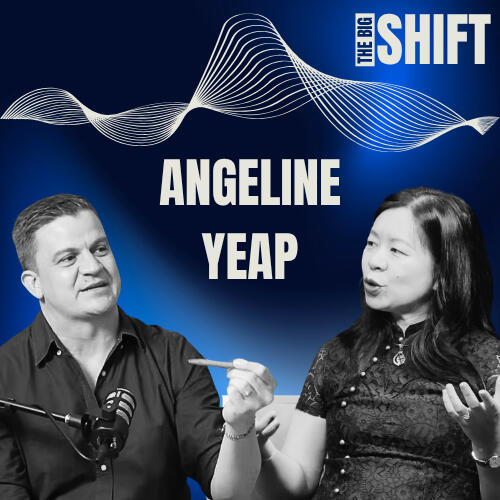
Episode 1 - Angeline Yeap
The Inside Job — How Transformation Really Happens in a Global Bank
"You can't just pivot a global bank by telling a bunch of developers: 'Hey, build me a new app."Angeline Yeap has spent 25 years driving transformation across DBS, Citi, HSBC, and UOB — in Singapore, London, Miami, and across Asia. The thread running through all of it isn't a product or a market. It's change. And after leading some of the most significant digital shifts in Asian banking, her conclusion is clear: the technology is rarely the hard part.In conversation with Moritz Kaffsack, Angeline walks us through what it actually took — from building the strategic case for mobile-first banking in 2016 before most banks saw it coming, to getting rid of the 50-page steering committee deck and replacing it with a one-hour weekly cadence where data outranked title. She talks about the moment she realised the HiPPO in the room — the Highest Paid Person's Opinion — was the single biggest obstacle to moving fast, and what she did about it.The conversation gets into the operational realities that management books don't cover: how to assemble a transformation team that actually has the backing of the organisation behind it, why change management is as important as the build itself, and what it looks like to bring 90 team heads onto a weekly call so no one hears about a new system for the first time at launch.Angeline also shares where she's seen transformations fail — and she offers a clear framework for what genuine transformation leadership looks like.Tune in to hear:Why the HiPPO kills transformation — and the specific moves that neutralise itHow to build a change team that moves fast without leaving the organisation behindWhy the most sustainable change always comes from within the organisationThe difference between transformation that sticks and innovation theatre — and the signals that tell you which one you're in
Text
Episode 2 - April Ann Fadallan
Pilot Purgatory — Why Most AI Transformations Stall and What Actually Moves Them

Pilot Purgatory — Why Most AI Transformations Stall and What Actually Moves Them"You end up with many pilots, but you're not able to scale. Because you're not solving the right problem."April Fadallan has spent 20 years as a translator between data, analytics, AI, and business — most significantly as part of the team that built what turned into a Harvard Business Review case study for AI-led transformation in banking. When she joined DBS's Analytics Centre of Excellence in 2018, there were no blueprints, no playbooks, and no roadmap to copy. What the team built over the next five years generated SGD 370 million in incremental value from AI in 2023 alone.In conversation with Moritz Kaffsack, April walks us through what it actually took to build the DBS analytics capability. She introduces the concept of the analytics translator — the role she herself played — whose job is to bridge the gap between technical teams building in the dark and business units who will only support what solves a problem they actually have. Without that bridge, she argues, pilots stay pilots - what McKinsey calls ‘pilot purgatory’.We talk about the specific mechanics of how to choose where to start — an impact versus effort matrix applied not to use cases but to the data infrastructure beneath them. She shares how her team cracked open the FX business by abandoning assumptions entirely, running a systematic experimentation framework, and letting customer behaviour — not opinion — drive the strategy. The result was significant growth in one of banking's most saturated, competitive categories.Looking ahead, she sees the next frontier clearly: autonomous agents handling payments, underwriting, and transactions on behalf of consumers — agent-to-agent commerce that reframes KYC as KYA, knowing your agents. The banks moving fastest are already past co-pilots and into governance design for what comes next. For everyone else, her advice is unambiguous: build your data infrastructure, build your AI governance, and don't treat change management as something you get to once the technology is ready.What you'll take away from this episode:Why 70% of AI transformation is a people and organisation problem — and what that means practically for how you structure the workThe analytics translator role: what it is, why it's the most important hire in any AI initiative, and what happens without itHow to escape pilot purgatory — the specific discipline of choosing use cases that align with what the business will actually fund and supportWhy homegrown change makers outperform external teams in driving sustainable transformation — and when to bring outsiders in anywayWhat the most advanced banks are building right now, and why AI governance is the capability that will separate leaders from laggards in the next 12 months
Text
Episode 3 - Gerard Koh
Trust as a Competitive Advantage — How to Build Human Capital in the Age of AI
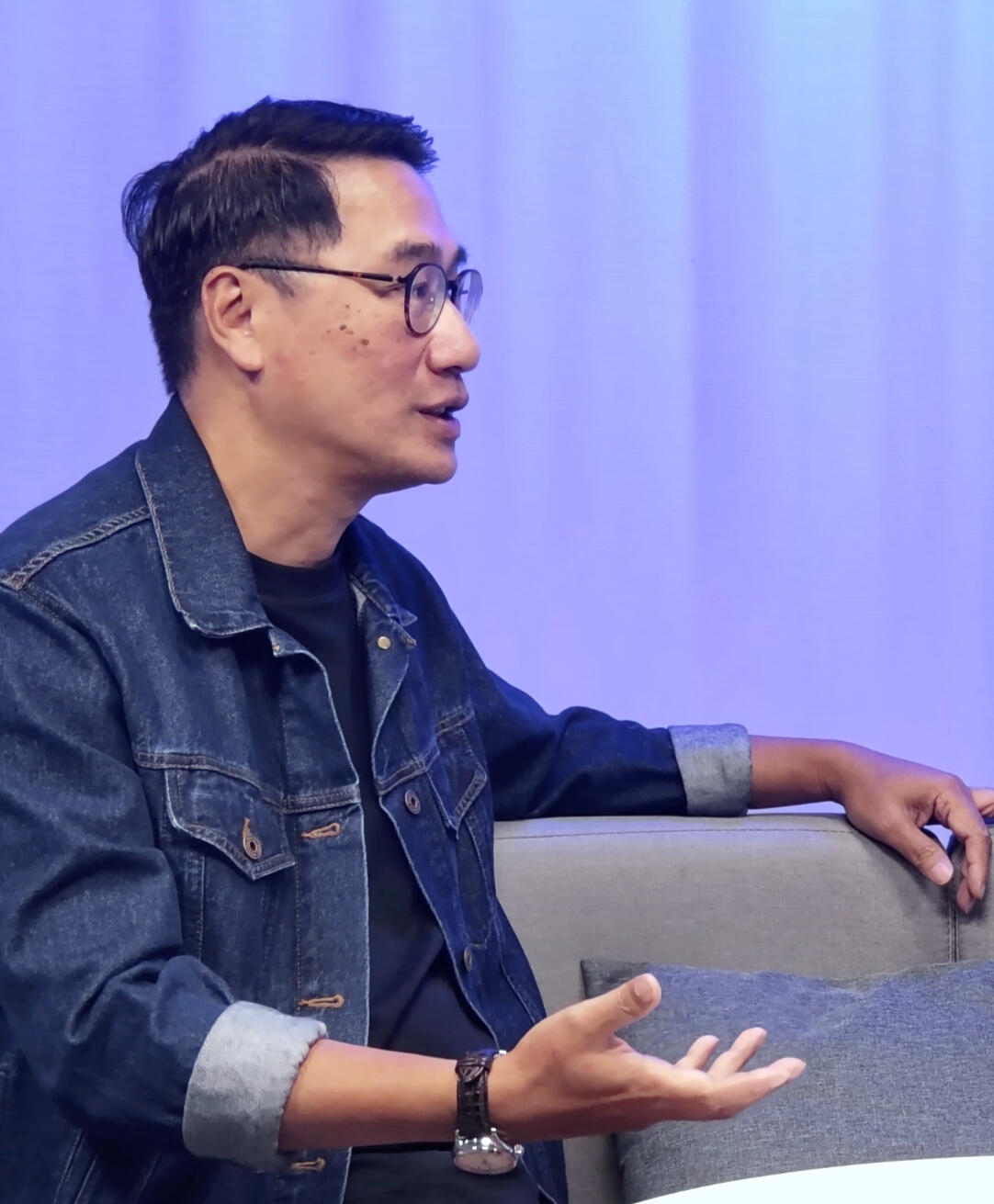
Trust as a Competitive Advantage — How to Build Human Capital in the Age of AI"AI is going to democratize everything else — flatten it. So what do you have left? You have trust."Gerard Koh heads the people function at Singtel, one of Singapore's largest and most prestigious enterprises. In this episode, he argues that when AI democratises knowledge, insights, and eventually execution, the only sustainable competitive differentiator left is whether your customers trust the people on the other side of the transaction.In conversation with Moritz Kaffsack, Gerard diagnoses three converging shifts reshaping the Singapore workforce simultaneously. The first is AI — accelerating change, compressing timelines, and disrupting the nature of work faster than most organisations can respond. The second is demographic: one third of Singapore's population will be over 65 by the end of the decade, half of today's young cohort will hold a university degree at some point in their lives, and 25,000 new citizens arrive every year, constantly revitalising the talent pool. The third is industrial: a structural shift away from brown industries and manual labour toward knowledge-based professional services — healthcare, financial services, sustainability, technology — where what you're selling is not a product but a promise, and where the basis of that promise is almost always trust.Put those three shifts together, Gerard argues, and you get a clear picture of what humans need to double down on going forward - and it’s not Technology: It’s building Trust.The framework he's implementing at Singtel is built around three variables: HI times AI times CI. Human intelligence, artificial intelligence, and cultural intelligence. The AI component is, as he puts it, "enough said" — the market is moving fast and organisations are investing heavily. What most are underinvesting in are the other two.On human intelligence, he pushes back against the instinct to train everyone on technical AI skills first. When Singtel asked its people what they needed most, the answer was striking: many said they could learn the tools themselves, the way they learned Excel without a course. What they couldn't teach themselves were the skills the organisation had never explicitly developed — what Gerard calls the three Cs. Care: the deeply human capacity for empathy and genuine connection with customers. Context: the ability to understand a situation well enough to know when an AI output is right and when it isn't. And connection: both the relational kind — knowing who to call, who to trust — and the strategic kind — joining the dots across a complex organisation to see opportunities others miss.Beneath those three Cs, he identifies the foundational skills that make them possible: critical thinking, problem-solving, and — crucially — emotional integrity. Not only EQ, the outward-facing emotional intelligence most organisations already train for, but EI: the inward-facing capacity to recognise and manage your own emotional state under pressure, in complexity, in the grey areas where no rule book applies. EQ teaches you how to manage people. EI teaches you how to manage yourself.Gerard argues that in a world where AI is handling more and more of the black-and-white, rules-based work, the grey areas are becoming the primary domain of human judgment. That means cultural intelligence — the capacity to navigate ambiguity in a way that builds rather than erodes trust — is a core competency.He also addresses the implementation challenge head-on. Getting a large organization through a genuine capability transformation while continuing to deliver quarterly results is not a sequencing problem — you don't transform after you perform. It's a coexistence problem. His frame: perform and transform are not a trade-off. They have to run simultaneously. Leaders who treat them as competing priorities will always deprioritise transformation when the numbers are under pressure. Leaders who treat them as inseparable will build organisations that can do both.His advice to anyone starting this journey: don't wait for certainty. Your headlights only shine so far. You can only see further when you move. Think big, do small things, and move fast.What you'll take from this episode:Why trust — not technology — will be the primary competitive differentiator in Singapore's knowledge economy as AI flattens everything elseThe HI × AI × CI framework: what human intelligence and cultural intelligence mean in practice, and why most organisations are underinvesting in bothThe difference between EQ and EI — and why emotional integrity is the skill leaders most need and least train forWhy accountability is the real reason humans must stay in the loop — and what happens to trust when they don'tHow to think about the three layers of trust-building: safety and security, reliability and consistency, and care when things go wrongThe perform-and-transform model: why transformation and performance have to coexist, and what it takes to build the organisational capacity to do bothWhy probing experiences — small moves, fast iteration — beat grand transformation programmes in a world that changes every three months
Text
Episode 4 - Eugenio Ferrante
From Survival to Growth — How to Turn Around a Company That Nearly Ran Out of Cash
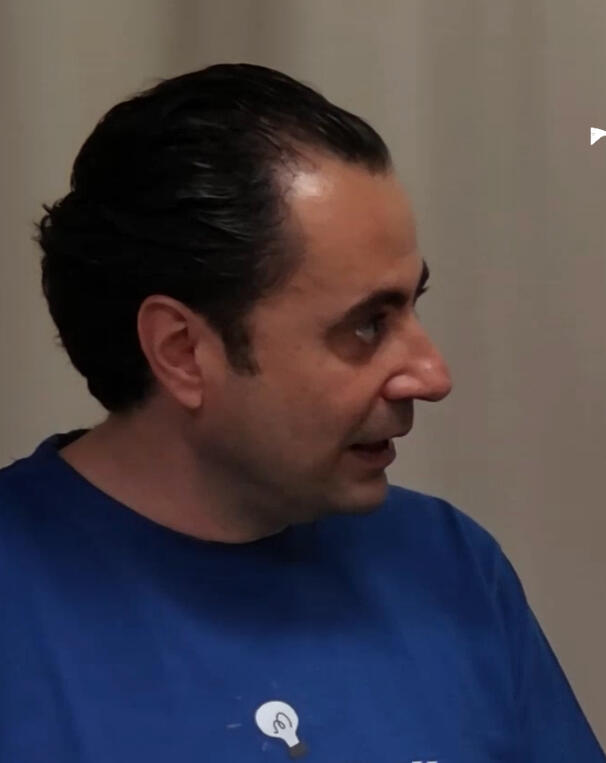
From Survival to Growth — How to Turn Around a Company That Nearly Ran Out of Cash"We're growing faster than we've ever been able to grow — with much less resources."Eugenio Ferrante is CEO of OSOME, an AI-enabled corporate services platform that's supported over 40,000 global startups & small and medium-sized businesses. In his career he has built, survived, and scaled businesses across consulting, co-living, and AI-powered software. After four years at Bain & Company and two software company stints, he founded Casa Mia — a co-living operator for young professional expats — the same day COVID hit Singapore. He built it to 500 rooms, turned the forced pause of lockdown into a product-building sprint that made the business more efficient than any competitor at the same scale, and sold it to one of Asia's largest co-living operators.He then stepped into Osome as it was approaching the edge of running out of cash. What he found when he arrived at Osome: multiple rounds of layoffs, depleted morale, senior talent gone, no clear direction, and an R&D team that had shrunk from over 120 people to 35.The strategic shift Eugenio made was both simple and direct: stop trying to serve everyone. Osome had been spreading resources across every business incorporated in Singapore. He narrowed the focus to two or three customer segments — tech startups and freelancers — where the data already showed stronger retention and higher satisfaction. Everything else followed. With half the marketing budget of pre-2023, the company started growing faster than it ever had.The second shift was technological — but it had been waiting years to happen. Osome's founders had always intended to automate the trivial, repeatable work in accounting. What they hadn't been able to do was execute that vision with the technology available at the time. When Gen AI arrived, the groundwork was already laid: the accounting process had been broken into small sub-processes, which meant AI could be applied immediately at the task level. By 2026, everything related to bookkeeping, document processing, bank reconciliation, and first-draft reporting was fully automated. Accountants now focus entirely on advisory work — the conversations and decisions that actually require human judgment.The conversation with host Moritz Kaffsack goes deep into the operational and cultural mechanics of the turnaround. How Eugenio managed the tension between exhausted long-serving employees and energetic new hires who kept proposing things that "had already been tried." How he rebuilt company-wide OKRs — previously siloed in the product team — into a live operating system tied directly to a four-year strategy. How he used open Slack channels to maintain transparency while pushing teams to make decisions faster rather than cycling through long discussions. And what it felt like to watch the first month of real growth become a quarter, and a quarter become a trend.What you'll take from this episode:How to make strategic focus the primary tool of a turnaround — and why saying no to some of your customers can be the fastest path to growthWhat it takes to rebuild culture and direction in a team that has survived multiple rounds of layoffs
How to manage the dynamic between battle-scarred veterans and fresh-energy new hires — and why you need bothWhy AI finally delivered on a vision that technology couldn't support for years — and what that means for any business that tried automation too earlyWhen fractional and independent operators create real leverage — and when they don't
Text
Episode 5 - Samuel Phan
The Growth Venture Playbook — How to Build, Turnaround, and Scale Businesses in Asia's Most Dynamic Categories
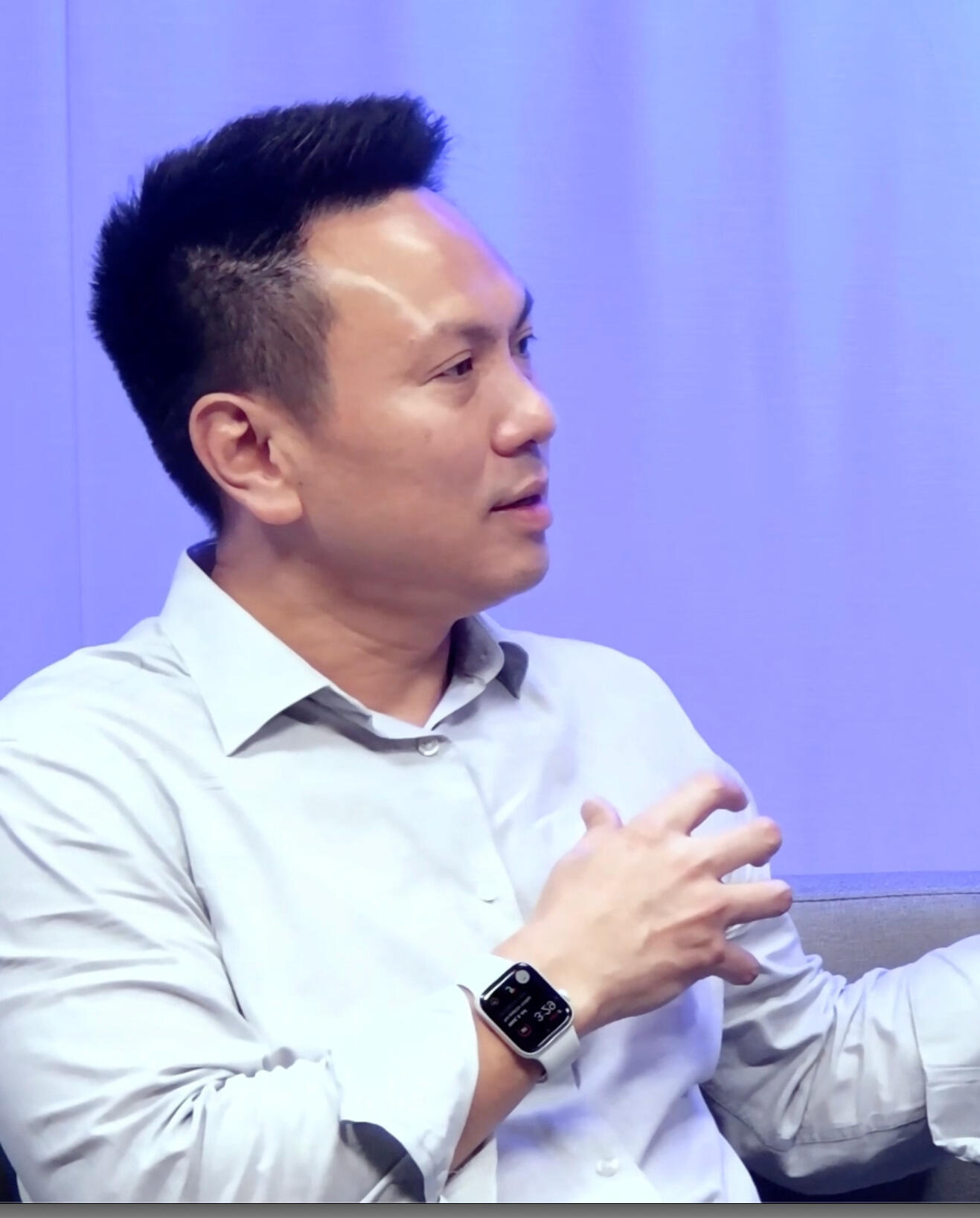
The Growth Venture Playbook — How to Build, Turnaround, and Scale Businesses in Asia's Most Dynamic Categories"Passion and believing that what you're doing is right is far more important than actually being right. Because you're painting a vision of a future that doesn't exist yet."Samuel Phan is GM Asia at MADE Group. He has spent 25 years in FMCG, entering categories early, building them from near zero, and scaling them across some of the world's most complex and fragmented markets. Wine when it was still a niche, Pet food before the category was established, now Protein nutrition. He is a growth venture specialist: working with companies from overseas trying to earn their place in markets where local competitors move faster, know the customer better, and don't carry the overhead of a global organisation.In this episode, Samuel shares with Moritz Kaffsack what 25 years of that work has taught him about category building, turnarounds, team composition, competitive strategy, and the limits of what a Western brand can assume when it enters Asia.His entry point is the pet food business, where he spent nearly a decade watching a market leader's advantage erode in real time. The lesson Samuel draws: first-mover advantage in a growing category is real but temporary. If you're not localising — products, go-to-market, team — category fragmentation will eat you.The turnaround story is highly instructive: He inherited a business losing money and losing topline in a growing category — a combination that makes no sense on the surface. When he looked at the China operation separately from the rest of the region, what emerged were two entirely different businesses with two entirely different problems. Two separate projects, two separate strategies, applied simultaneously. The devil, as Samuel puts it, is always in the details. You have to organise yourself around those details before you can execute.On team building for growth ventures, his view is clear: What you need are generalists with functional depth — people who can hold their role and then step outside it when the business needs them to. Mindset, he argues, matters more than function. A generalist with the right mindset and a solid foundation will outperform a brilliant specialist who can't operate outside their lane.The conversation also extends into the question of Asian brands going global — a reversal of the dynamic Samuel has spent his career navigating. His read: Korea is the clearest example of what's possible - a culture that has exported itself through music, drama, food, and beauty, creating a brand halo that consumer products can ride. China is more complicated — electric vehicles are proving the quality case, but brand trust for consumer goods is still being built. The insight: brand follows culture. A product from a country whose cultural exports are aspirational has a built-in advantage. A product from a country whose cultural narrative is still being shaped has a harder hill to climb, regardless of product quality.What you'll take from this episode:Why first-mover advantage in a growing category is real but temporary — and what you have to do before fragmentation catches youHow to diagnose a turnaround by separating a complex business into its distinct component problems before you try to solve anythingWhy growth ventures need generalists with functional depth rather than specialists — and how mindset matters more than expertise in lean teamsHow to lead through resistance in markets that push back on outside direction — and why passion and conviction in a direction matters more than being rightWhat it takes for Asian brands to go global — and why cultural export has to precede product exportWhy AI adoption has to be proportionate to where a business actually is — and what "building the foundation first" means in practice
Text
Episode 6 - Darren Tan
The Secret to High-Performance Teams — And Why Companies Often Get It Backwards
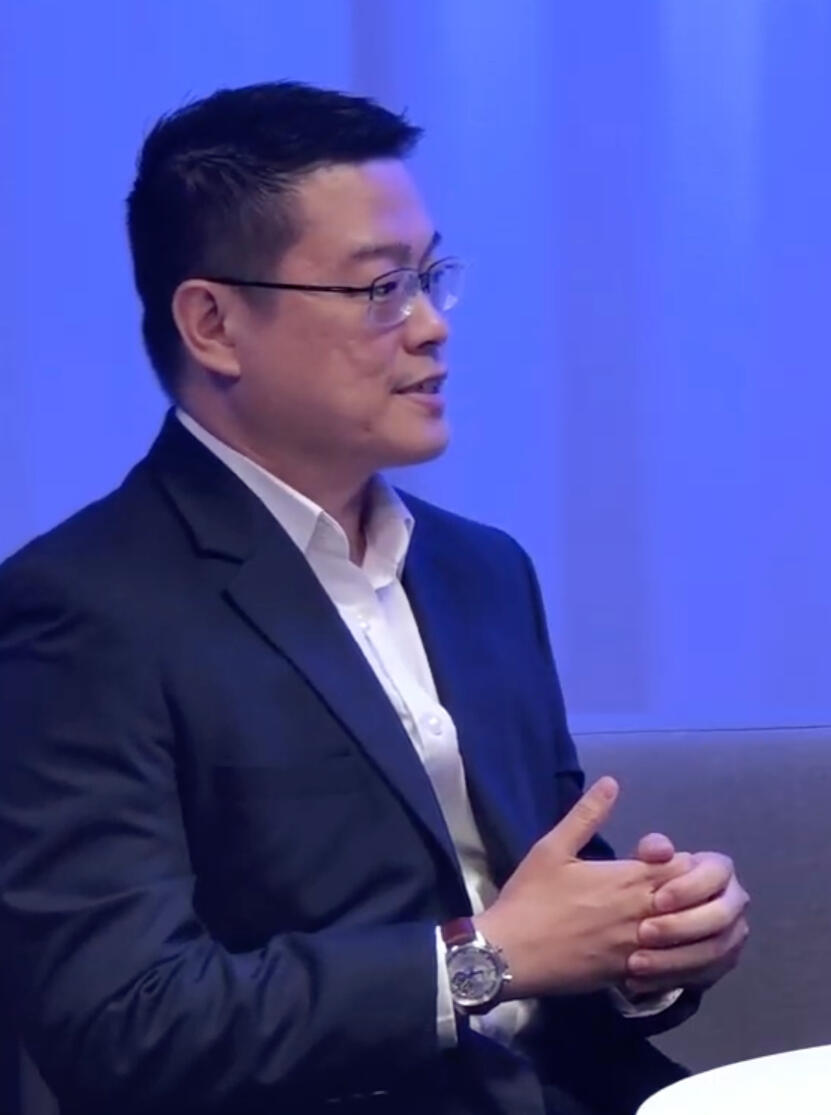
The Secret to High-Performance Teams — And Why Companies Often Get It Backwards"In the military, we develop leaders in reverse from many corporate programs. You start with yourself first — because if you don't understand yourself, you can't lead anyone else."
Darren Tan spent 20 years as an organizational psychologist in the Singapore Army before moving to the private sector to work with leadership teams. Now Founder at MindThrv Asia, Darren brings an organizational psychologist's lens to the transformation challenges Moritz Kaffsack has been exploring throughout The Big Shift Podcast. In this episode, he explains why the organizational psychologist needs to sit at a distance from the team and collect data with a guaranteed layer of anonymity. That structural neutrality is what makes the data real. In corporate settings, when companies try to do the same work internally - through HR teams or managers - psychological safety is too low and power distance too high for honest data to surface. The result: organisations invest in solving the wrong problems, get no results, and blame the intervention rather than the diagnosis.When it comes to transformation, Darren’s core conviction: transformation doesn't fail because of bad strategy or wrong technology. It fails because leaders don't understand what's actually happening in the people and culture beneath them. Darren walks through what actually happens inside an organisation when a new AI tool gets introduced: New governance requirements surface. Job descriptions become obsolete overnight. Accountability gaps open up between teams. The staff who already know AI don't need training — they need mentoring on application. The staff who are completely new need structured coaching, not workshops. And the staff in between need something different again. A single training programme delivered to all three groups produces behavioural change in almost none of them.He also shares a case study of a company he worked with that had hit a growth ceiling — board and management misaligned on strategy, middle management unable to carry execution, senior leadership trapped in operational firefighting because the layer beneath them wasn't capable of running the day-to-day. His entry point wasn't the strategy. It was the middle management — because without a steady pair of hands running operations, senior leaders can never lift their gaze to where it needs to be.His challenge to any leader planning a transformation: before you introduce the tool, redesign the job description. Before you run the training, segment your workforce by what they actually need. And before you commission an engagement survey, ask whether your senior management is genuinely prepared to act on what it finds.What you'll take from this episode:The four-stage model of behavioural change — awareness, motivation, knowledge, ability — and why skipping any stage guarantees failureWhy AI adoption requires job redesign, governance changes, and accountability restructuring before training even startsHow to diagnose a growth-ceiling problem and identify whether it's a strategy, middle management, or team capability issueWhy hierarchy doesn't kill agility — and what actually doesHow to build psychological safety in organisations where it doesn't exist — and why getting real data requires structural neutralityWhen to grow talent internally versus bring in outside capability — and how to integrate the two without destroying what's working
Text
Episode 7 - Kelly Wong
‘How’ is the Death of Dreams - Building Vietnam’s Digital Future

‘How’ is the Death of Dreams - Building Vietnam’s Digital Future"Adopting a new technology, especially AI, is basically a change in your personal identity"In this episode, Kelly Wong, CEO of VNG, opens up about how a career of well-timed unconventional decisions has led him to some of the most consequential questions facing technology leaders in Southeast Asia right now: how do you lead AI transformation inside a company that already thinks of itself as technical? What does it actually take to build a digital economy that can hit Vietnam's 2045 ambitions? And what separates the people who genuinely crack AI from those who get stuck at the tool stage?On transformation, Kelly's instinct is against the clean-slate approach because he's seen what gets lost. The process of migrating what you have to what you want it to be, done properly, forces a level of corporate self-awareness that a greenfield build never delivers. You learn where your data actually comes from, how your processes really work, and whether your people understand what they're doing well enough to do it differently. Organisations that skip that work, he argues, often end up with a brand new system and the same old behaviour — millions spent and a workforce that goes back to Excel because nothing in the people layer changed.He argues that today, transformation itself has changed. With AI compressing the time it takes to do process and systems transformation, output can be created much faster with much smaller teams, and the cost of failure is much lower. Which means the constraint - and therefore the primary focus - is the people layer. The skill that becomes irreplaceable is the ability to read that output with judgment, communicate it clearly to people, and own the decision. Even for technical teams that is now the primary skill, making evaluation of technical skills obsolete - a shift-change for a technical organisation.Kelly identifies four characteristics that distinguish the people who genuinely get good at working with AI: curiosity; clarity of communication - because if you can't articulate what you need to a person, you definitely can't articulate it to a model; the ability to organise process and sequence; and leadership and management skill - the capacity to direct, evaluate, and take accountability for what the AI produces.He sees the entertainment industry challenge of AI-generated content as both scary and exciting - ultimately a test that forces leading players to redefine what to consider good, great, and okay - and to decide: ‘which part of the spectrum do we want to be?’Asked about Vietnam's digital economy ambitions, Kelly is optimistic and also clear about what's missing. The infrastructure foundations - compute, power, data centres - need to keep pace with the ambition. The education system is producing capable, technically literate young people. The entrepreneurial spirit is multi-generational and real. What isn't yet in place is the capital markets infrastructure that allows good ideas to be financed, to exit, and for the capital to be recycled back into new ideas.Host: Moritz Kaffsack
Text